In an era where fast furniture and disposable consumerism dominate, IKEA is rewriting the rulebook—proving that affordability and sustainability can go hand in hand. With a bold climate-positive by 2030 pledge, the Swedish giant isn’t just minimizing its footprint; it’s actively healing the planet. Here’s how IKEA became the gold standard for corporate climate action in 2025.
1. Zero Waste, Zero Excuses: The Disassembly Revolution
Gone are the days of furniture ending up in landfills. IKEA’s 2025 product lines are 100% designed for disassembly, meaning every shelf, chair, and table can be broken down and recycled.
- Modular designs allow easy part replacement, extending product life.
- No more “glued-together” furniture—everything is screw-based or snap-fit.
- Take-back programs ensure materials re-enter production cycles.
Impact: Zero operational waste to landfill—diverting 1.2M tons of furniture waste annually.
2. “Buy Back & Resell” Goes Global
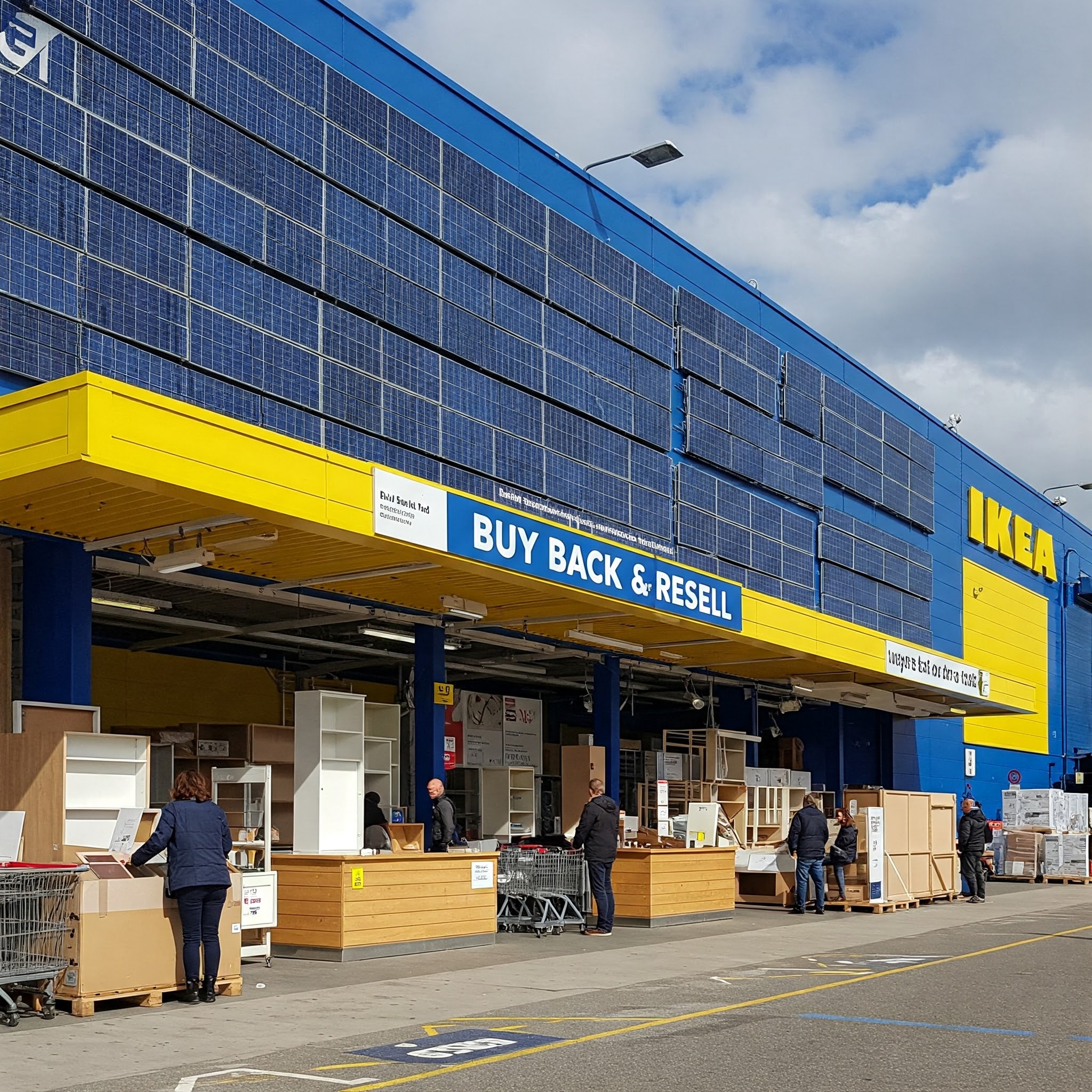
IKEA’s second-hand revolution is in full swing, with its Buy Back & Resell program now in 50+ countries. Customers return old furniture for store credit, while IKEA refurbishes and resells it at a discount.
- 30% drop in consumer emissions (avoiding new production).
- 1.5M items resold in 2024 alone—keeping products in use for years longer.
- Affordable sustainability—making circular living accessible to all.
Why It Works: Furniture waste is the world’s fastest-growing waste stream—IKEA is flipping the script.
3. Stores Run on Sunshine & Earth’s Heat
IKEA’s diesel generators are history. In 2025, all stores are powered by:
- On-site solar panels (covering rooftops and parking lots).
- Geothermal heating/cooling (tapping into Earth’s natural energy).
- Energy-neutral designs (some stores even feed surplus back to the grid).
Bonus: EV charging stations at every location, encouraging green transport.
Why IKEA’s Leadership Matters
While many companies greenwash, IKEA is rewriting retail’s environmental playbook:
✅ Circular economy at scale—proving sustainability isn’t just for luxury brands.
✅ Radical transparency—publishing real-time emissions data.
✅ Affordability as a weapon—making eco-living accessible to millions.
The Takeaway: IKEA’s 2025 strategy shows that big business can be a force for good. The question is—who will follow their lead?